

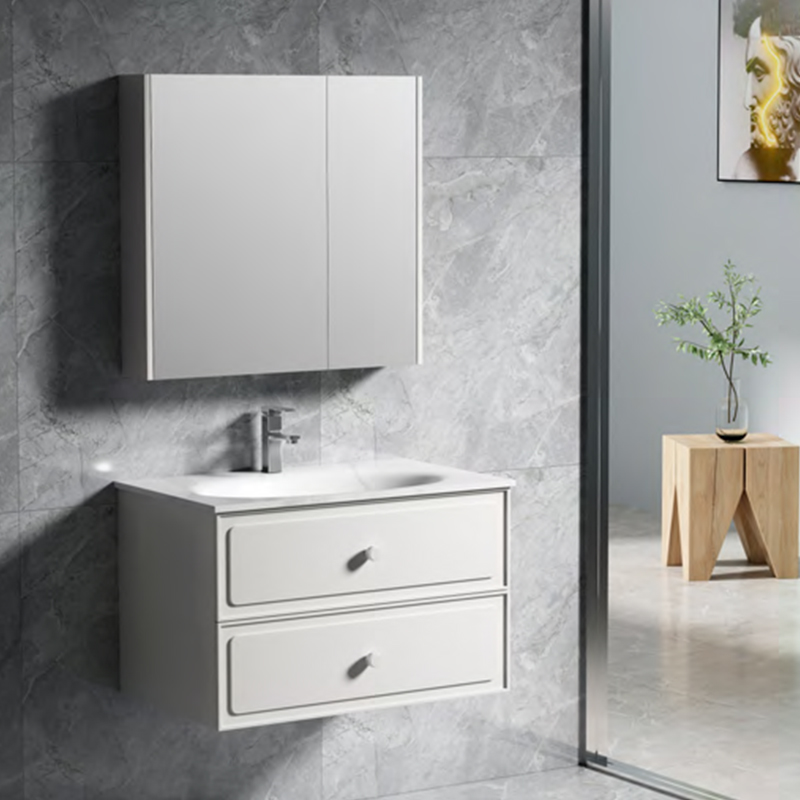
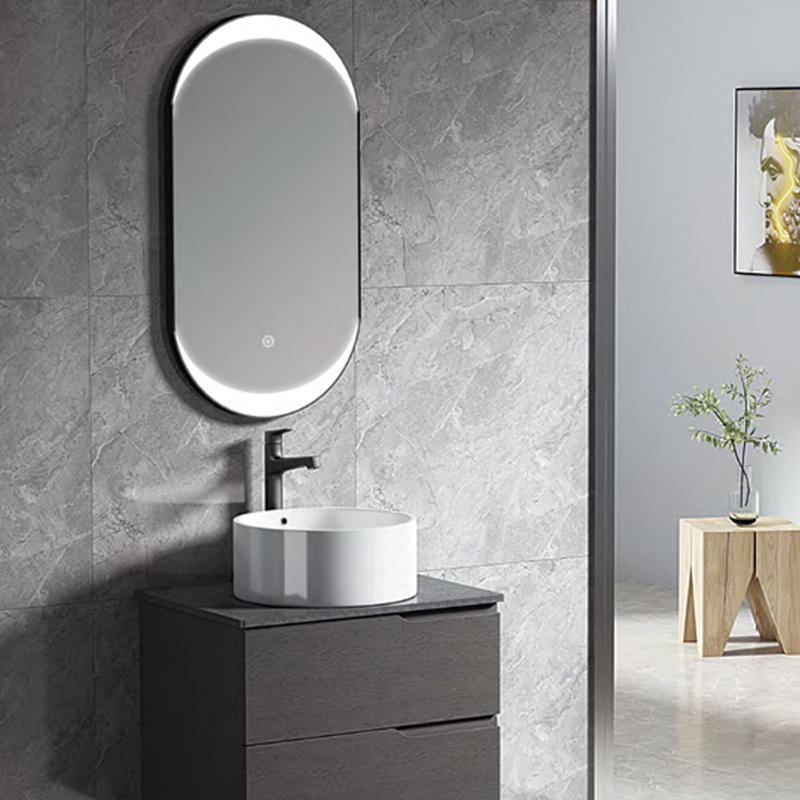
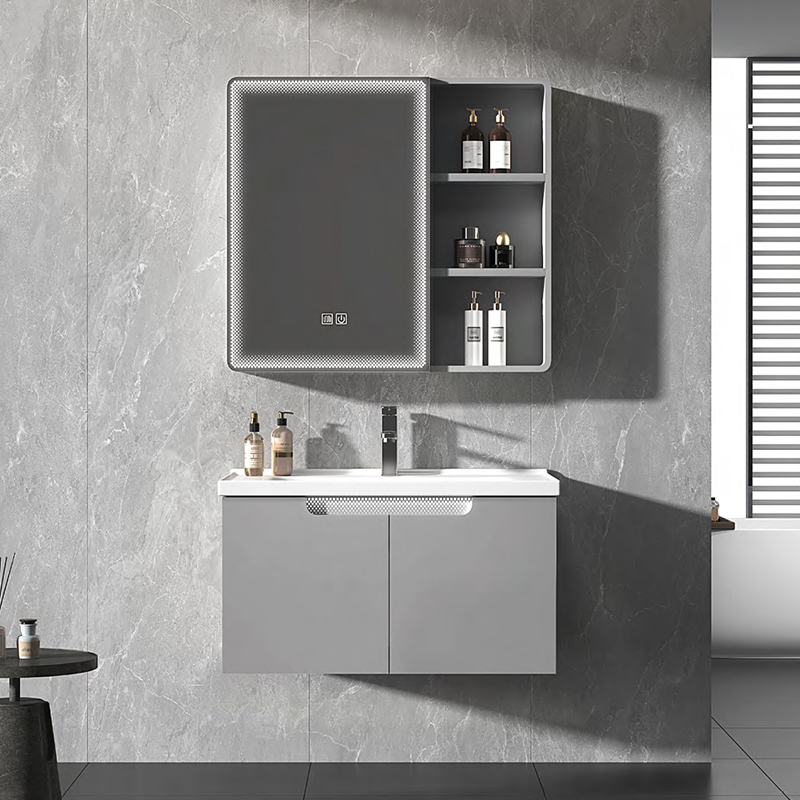
Bathroom mirrors are no longer just simple ‘mirrors’. With the development of smart home technology, led bathroom vanity mirror that combine lighting, anti-fogging and smart control are gradually becoming the new choice for modern bathroom spaces.
So, what exactly is the difference between traditional bathroom mirrors and smart led mirror? Which one is better suited to your bathroom?
This article will provide a comprehensive comparison covering features, user experience, installation requirements, price and suitable scenarios, helping you quickly find the right product for you.
What is a traditional bathroom mirrors?
traditional bathroom mirrors rely on the principle of light reflection to produce a clear image. The mirror surface consists of glass, a reflective metal layer and a protective coating: the back of the glass is coated with a reflective layer of silver or aluminium, and sealed with a protective lacquer to enhance corrosion resistance and extend its lifespan.
They are used for daily grooming, including combing hair, applying make-up, shaving and tidying one’s appearance.
Advantages and disadvantages of traditional bathroom mirrors
Advantages:
1. Low cost and great value for money
Traditional bathroom mirrors do not include LED strips, power drivers or electronic components, so they are cheaper to manufacture and offer excellent value for money.
2. Simple installation
No electrical connection is required; there is no need to install power cables or sockets. Installation is completed simply by securing the mirror using wall brackets or a mount.
3. Simple structure, greater durability
As there are no electronic components, there is no risk of faults such as strip lighting ageing or touch switches malfunctioning, ensuring a stable and reliable product structure.
4. Low maintenance costs
There is no need to replace electronic components, making long-term maintenance hassle-free.
Disadvantages:
1. plain bathroom mirror lack built-in lighting and rely entirely on the room’s existing lighting. If the bathroom is poorly lit, shadows may form, resulting in a poor experience for activities such as applying make-up, skincare, shaving and beauty treatments.
2. No demisting function
The mirror surface is prone to fogging after a shower, requiring users to wipe it frequently; the user experience is inferior to that of an LED demisting mirror.
3. No smart features
With limited functionality, it fails to meet the smart home requirements of modern households.
traditional bathroom mirrorsvs led bathroom vanity mirror
Comparison criteria traditional bathroom mirrors led bathroom vanity mirror
Price ★★★★★ ★★★
Installation difficulty ★★★★★ ★★★
Lighting effect ✖ ✔
Anti-fog function ✖ ✔
Smart features ✖ ✔
Maintenance costs Low Medium
When should you choose a traditional bathroom mirrors?
traditional bathroom mirrors are usually the more cost-effective option if the following applies:
1. Limited budget
You wish to keep renovation costs down and have no particular need for lighting or smart features.
2. Good bathroom lighting conditions
The bathroom has ample natural light, or is already fitted with a separate mirror light, so there is no obvious need for supplementary LED lighting.
3. Excellent bathroom ventilation
The wet and dry separation design is well-executed, so the mirror does not easily fog up after showering, making an anti-fog function unnecessary.
What is an led bathroom vanity mirror?
An led bathroom vanity mirror is a plain bathroom mirror that integrates an LED lighting system with traditional mirror imaging technology, achieving the integrated combination of mirror imaging and auxiliary lighting functions. LED light sources provide uniform, soft lighting that closely resembles natural light. This effectively eliminates issues such as facial shadows, colour distortion and uneven lighting caused by the single angle and insufficient brightness of plain bathroom mirror, making daily routines such as applying make-up, skincare and shaving more convenient and precise.
Advantages and Disadvantages of led bathroom vanity mirror
Advantages
1. A superior lighting experience
LED lighting is even and soft, offering front-lit, backlit or dual-lighting solutions that significantly improve the quality of facial illumination.
Common configurations include:
Front-lit mirrors
Backlit mirrors
Dual-lighting mirrors (front and back)
The visual experience is markedly enhanced compared to traditional mirror bathroom.
2. Elevates the overall quality of the bathroom
Combining modernity with a technological aesthetic, they align with contemporary home design trends and effectively enhance the quality and visual appeal of the space.
3. Anti-fog Functionality
With a built-in heated anti-fog film, the mirror remains clear after bathing, eliminating the need for frequent wiping.
4. Extensive Smart Features
Configurable options include:
Touch Switch
Lighting activated or deactivated with a light touch
Stepless Dimming
Brightness adjusted by long press
Motion Sensor
Lights turn on automatically when approached and off when you leave
Gesture Sensing
Control the light with a wave of the hand to avoid smudging the mirror surface
Three-colour Dimming
Warm light 3000K, natural light 4000K, cool white light 6000K
Memory Function
Automatically remembers the last used brightness and colour temperature
Bluetooth speaker, digital clock, temperature display, date display
Shaver socket, USB charging port, Type-C port
5. Energy-efficient and environmentally friendly
LED strip lights offer the following advantages:
Low energy consumption; LEDs consume only one-tenth of the energy of traditional light bulbs
Low heat output
Long service life (up to 50,000 hours)
Better aligned with green and energy-saving trends
6. High Safety
Low-voltage operation (typically 12V or 24V) eliminates the risk of electric shock, making them more suitable for damp environments such as bathrooms.
Disadvantages
1. Higher price than traditional mirror bathroom
Due to the addition of components such as LED strips, power drivers, touch switches and heated anti-fog films, the overall cost is higher than that of plain bathroom mirror
2. More demanding installation requirements
Power connections usually need to be pre-installed, and the installation process is more complex than for traditional mirror bathroom.
3. Issues with ageing electronic components
After prolonged use, problems such as LED light decay, driver ageing or touch switch failure may occur.
Why choose an led bathroom vanity mirror for certain scenarios?
Poor lighting conditions: Insufficient light in the bathroom, requiring improved facial illumination
Seeking a better user experience: Tired of frequently wiping the mirror after a shower, seeking the convenience of anti-fogging
Focus on quality of life: Requires adjustable brightness and colour temperature to accommodate precise tasks such as make-up application, skincare and shaving
Smart home integration: Preference for intelligent features such as wave detection, motion sensors and Bluetooth speakers
Aesthetic requirements: Desire to enhance the overall style and modern feel of the bathroom
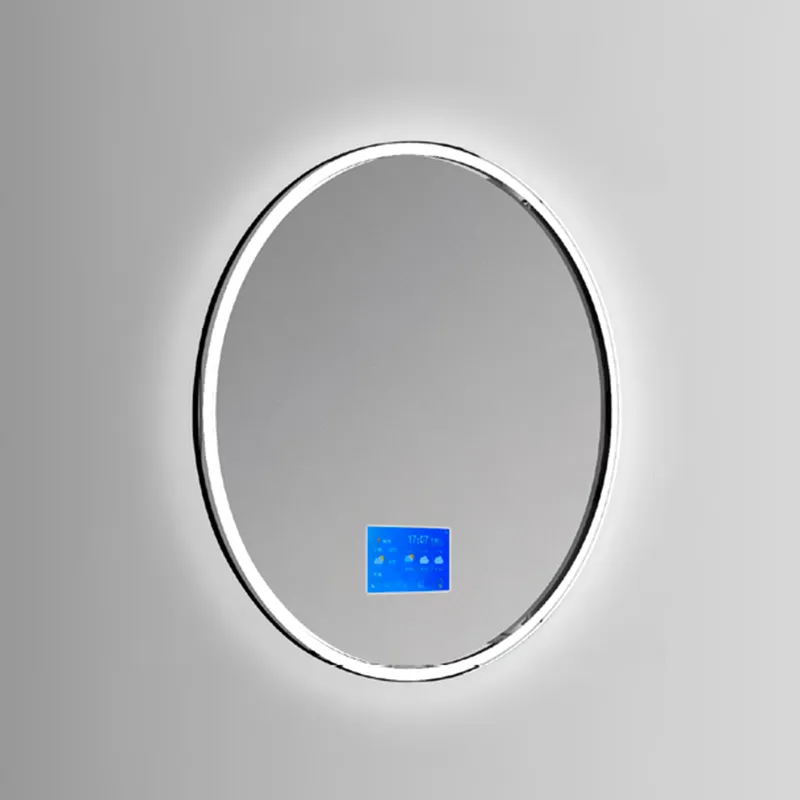
Summary: traditional mirror bathroom prioritise value for money, whilst led bathroom vanity mirror prioritise the user experience
traditional mirror bathroom fulfil the basic need of ‘looking in the mirror’, whereas smart led mirror make the act of looking in the mirror clearer, more comfortable and more intelligent.
Key purchasing principles: Consider your actual budget, bathroom environment and personal functional requirements as a whole. If your bathroom has ample natural light, a well-separated wet and dry area, and a limited budget, a traditional bathroom mirror will suffice for basic needs; however, if you are seeking a superior lighting experience, anti-fog convenience and smart features, an led bathroom vanity mirror is the better choice.
